Big Mac: The Iconic Burger That Defined American Fast Food...
Jordan Myers
The Birth of a Legend: How the Big Mac Came to Be
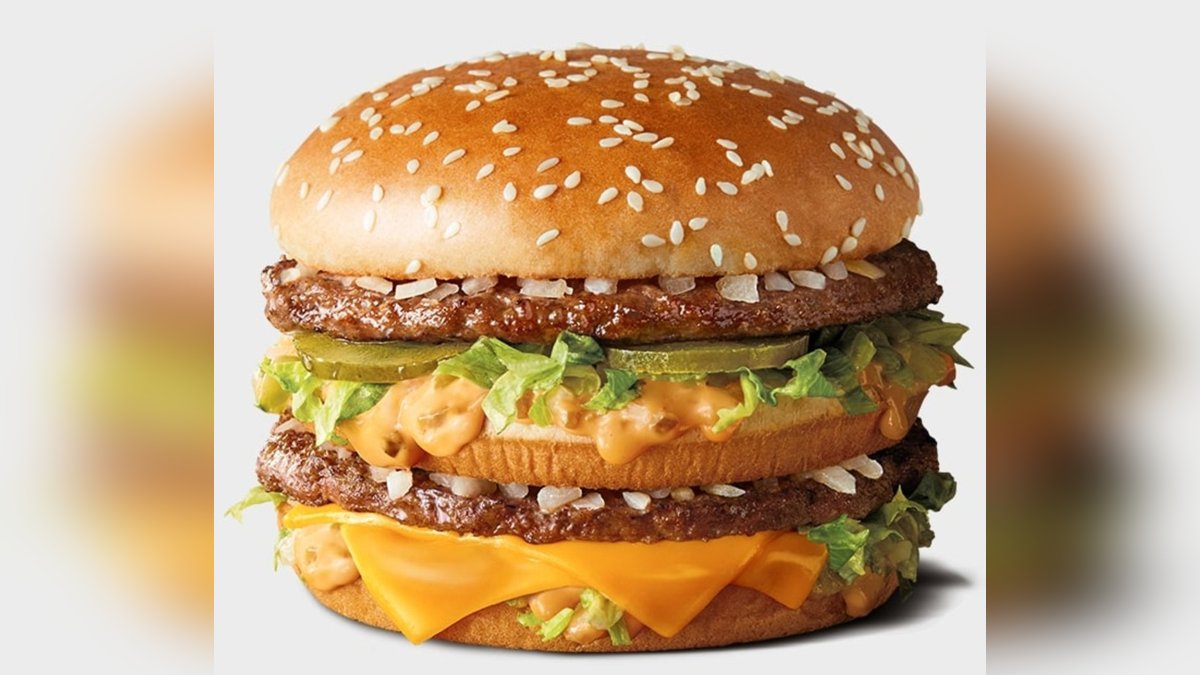
The Big Mac wasn't born in a corporate boardroom--it was created by a franchisee. In 1967, Jim Delligatti, a McDonald's franchise owner in Uniontown, Pennsylvania, wanted to compete with other burger chains that offered larger sandwiches. He experimented with a double-decker burger featuring two beef patties, special sauce, lettuce, cheese, pickles, and onions on a three-part sesame seed bun. The first Big Mac sold for 45 cents. Within a year, it was added to the national menu, and by 1969, it was a permanent fixture. The burger's name was suggested by Esther Glickstein Rose, a 21-year-old McDonald's advertising secretary, who thought "Big Mac" sounded catchy and substantial.
What made the Big Mac revolutionary was its structure. The middle bun--a thin slice of toasted bread--separated the two patties, allowing the sauce and toppings to distribute evenly. This design prevented the burger from becoming soggy and gave each bite a balanced mix of flavors. McDonald's invested heavily in marketing the Big Mac, launching the iconic "Two all-beef patties, special sauce, lettuce, cheese, pickles, onions on a sesame seed bun" jingle in 1974. The jingle became a cultural touchstone, embedding the Big Mac's ingredients into the American psyche.
Did you know? The Big Mac was originally called the "Aristocrat" before Delligatti settled on the name we know today. The first Big Mac sold for just 45 cents--a far cry from today's average price of around $5.50.
The Big Mac's success wasn't instant. Early sales were modest, but a clever advertising campaign and the burger's unique taste quickly built a loyal following. By the 1970s, the Big Mac was McDonald's flagship product, driving traffic to stores and boosting overall sales. It also helped McDonald's expand internationally, as the Big Mac became a symbol of American culture abroad.
Deconstructing the Big Mac: Ingredients and Preparation
The Big Mac is a masterclass in fast food engineering. It starts with two 1.6-ounce beef patties, each seasoned with salt and pepper and cooked on a flat-top grill. The patties are thin, ensuring they cook quickly and stay juicy. The special sauce--a tangy, creamy blend of mayonnaise, sweet pickle relish, yellow mustard, vinegar, garlic powder, onion powder, and paprika--is the burger's secret weapon. McDonald's has never fully disclosed the exact recipe, but food scientists have reverse-engineered it to include ingredients like soybean oil, pickle relish, and high-fructose corn syrup.
The bun is a three-part sesame seed bun, with the middle slice toasted to add texture. The toppings include one slice of American cheese, shredded iceberg lettuce, two pickle slices, and rehydrated onions. The assembly order is critical: bottom bun, special sauce, lettuce, cheese, patty, middle bun, special sauce, lettuce, pickles, onions, patty, top bun. This layering ensures that the sauce doesn't soak through the bun and that each bite has a consistent ratio of ingredients.
Nutritionally, a Big Mac packs 550 calories, 30 grams of fat, 45 grams of carbohydrates, and 25 grams of protein. It also contains 1,010 milligrams of sodium--about 44% of the recommended daily intake. While it's not health food, the Big Mac's nutritional profile is surprisingly balanced for a fast food burger, with a decent amount of protein and some fiber from the lettuce. McDonald's has made efforts to improve the Big Mac's quality over the years, switching to fresh beef (not frozen) in many markets and removing artificial preservatives from the patties.
The Big Mac Index: A Global Economic Indicator
In 1986, The Economist magazine created the Big Mac Index as a lighthearted way to measure purchasing power parity (PPP) between currencies. The idea is simple: since the Big Mac is sold in nearly 120 countries with consistent ingredients and preparation, its price can be used to compare the relative value of currencies. For example, if a Big Mac costs $5.50 in the U.S. but the equivalent of $3.00 in China, the Chinese yuan is considered undervalued. The index has become a widely cited economic tool, even referenced by central bankers and financial analysts.
The Big Mac Index reveals fascinating insights about global economies. In 2024, the most expensive Big Mac was in Switzerland, costing around $7.50, while the cheapest was in Egypt, at about $1.50. The index also highlights inflation trends: during the COVID-19 pandemic, Big Mac prices rose sharply in many countries due to supply chain disruptions and labor shortages. McDonald's uses the index internally to set pricing strategies and adjust for local market conditions.
Critics argue that the Big Mac Index oversimplifies complex economic factors, such as labor costs, rent, and local taxes, which vary widely between countries. However, its simplicity is also its strength--it makes abstract economic concepts accessible to the general public. The index has spawned imitators, including the Starbucks Latte Index and the Ikea Billy Bookcase Index, but none have achieved the cultural cachet of the Big Mac Index.
Cultural Impact: The Big Mac in Movies, Music, and Media
The Big Mac has permeated American pop culture like few other foods. It appears in countless movies and TV shows, often as a symbol of indulgence or Americana. In the 1994 film Pulp Fiction, Vincent Vega (John Travolta) famously discusses the differences between European and American fast food, including the Big Mac. The burger also features in The Simpsons, Seinfeld, and Stranger Things, where it's used to evoke a specific time and place.
Music artists have name-dropped the Big Mac for decades. In 1985, the hip-hop group The Fat Boys released a song called "Big Mac" that celebrated the burger. More recently, rappers like Drake and Lil Nas X have referenced the Big Mac in lyrics, cementing its place in modern music. The burger even inspired a limited-edition McDonald's collaboration with the fashion brand Alexander Wang in 2019, which included a gold-plated Big Mac bag and a matching blanket.
The Big Mac's cultural influence extends to language. The phrase "Big Mac" is often used as a generic term for any large, indulgent burger. McDonald's has trademarked the name aggressively, but it remains a household word. The burger's iconic status has also made it a target for parody and criticism, with documentaries like Super Size Me (2004) using the Big Mac as a symbol of unhealthy eating. Despite this, the Big Mac's popularity endures, with McDonald's selling approximately 550 million Big Macs annually in the United States alone.
Innovations and Variations: The Big Mac's Evolution
McDonald's has experimented with the Big Mac formula over the years, introducing limited-time variations to keep the menu fresh. The Grand Mac, launched in 2017, featured larger patties (1/3 pound each) and a bigger bun, catering to customers who wanted a heartier portion. The Mac Jr., also introduced in 2017, was a single-patty version for those who found the original too filling. Both were discontinued in 2020, but they demonstrated McDonald's willingness to adapt the Big Mac concept.
International variations of the Big Mac reflect local tastes. In India, where beef is not widely consumed, the Maharaja Mac uses chicken patties. In Japan, the Big Mac has been offered with teriyaki sauce and even a "Samurai Mac" with a pork patty. In Australia, McDonald's introduced a "Big Mac with Bacon" in 2023, adding crispy bacon strips to the classic recipe. These regional adaptations help McDonald's maintain relevance in diverse markets while preserving the core Big Mac experience.
McDonald's has also embraced technology to enhance the Big Mac. In 2023, the company introduced a "Big Mac with Fresh Beef" in the United States, switching from frozen patties to fresh, never-frozen beef. This change improved the burger's texture and flavor, though it required significant supply chain adjustments. McDonald's is also testing plant-based versions of the Big Mac, using a pea-protein patty from Beyond Meat, to appeal to flexitarian consumers. These innovations ensure that the Big Mac remains competitive in a rapidly evolving fast food landscape.