1. The Surprising Origins of the Croissant: From Vienna to Paris
Despite its quintessentially French identity, the croissant's roots trace back to Austria. The ancestor of the croissant is the kipferl, a crescent-shaped bread enjoyed in Vienna since the 13th century. Legend holds that in 1683, Viennese bakers created a crescent-shaped pastry to celebrate the defeat of the Ottoman Empire's siege--the crescent shape mocking the Ottoman flag. However, historical evidence suggests the kipferl existed long before that battle.
The transformation from kipferl to croissant began in 1839 when Austrian artillery officer August Zang opened a Viennese bakery in Paris. His shop, the Boulangerie Viennoise, introduced Parisians to laminated dough techniques and the kipferl. French bakers quickly adopted the method, refining the recipe with more butter and a richer yeast dough. By the early 20th century, the croissant had become a staple of French breakfast culture, distinct from its Austrian predecessor.
Key Stat: The first recorded French recipe for croissants appeared in 1906 in La Cuisine de Madame Saint-Ange, but it wasn't until the 1920s that the modern croissant--made with laminated yeast dough--became standardized in French patisseries.
Today, France consumes an estimated 1.5 billion croissants annually, with the average French person eating about 23 croissants per year. The pastry's journey from Vienna to Paris illustrates how culinary innovation often emerges from cross-cultural exchange.
2. The Science of Lamination: How 73 Layers Create Flaky Perfection
The croissant's signature flaky, airy texture is the result of a precise technique called lamination. This process involves folding butter into dough multiple times to create dozens of alternating layers of dough and butter. When baked, water in the butter turns to steam, pushing the layers apart and creating the characteristic honeycomb interior.
A classic croissant requires a minimum of 27 layers, though many artisan bakers aim for 55 to 73 layers. The process begins with a détrempe--a basic yeast dough made from flour, water, milk, sugar, salt, and a small amount of butter. This dough is chilled, then wrapped around a block of butter (the beurrage) and folded repeatedly. Each fold triples the number of layers: a single fold yields 3 layers, a double fold yields 9, and a triple fold yields 27. Three turns produce 81 theoretical layers, though some merge during rolling.
Temperature control is critical. The butter must remain at 55-60°F (13-16°C)--cold enough to stay solid but pliable enough to roll without breaking. If the butter shatters, it won't create distinct layers; if it melts, it soaks into the dough, producing a greasy, dense pastry. Professional bakers often use European-style butter with 82-84% butterfat content, which has less water and better plasticity than standard American butter.
The final proofing stage is equally delicate. Croissants are proofed at 75-80°F (24-27°C) for 2-3 hours. Over-proofing causes the butter to melt and leak out; under-proofing results in a dense, bready texture. An egg wash applied just before baking gives the croissant its glossy golden-brown crust.
3. The Butter Debate: European vs. American Butter in Croissant Making
Butter quality is the single most important factor in croissant flavor and texture. European-style butter contains 82-84% butterfat, compared to 80% for standard American butter. The higher fat content means less water, which translates to better lamination, a richer taste, and a more tender crumb. French beurre de baratte (churned butter) from regions like Normandy or Poitou-Charentes is especially prized for its creamy, nutty flavor.
American bakers often face challenges sourcing high-fat butter. Many turn to brands like Plugrà, Kerrygold, or Vermont Creamery, which offer 82-84% butterfat. Some artisan bakeries even import French butter such as Échiré or Bordier, which can cost upwards of $10 per pound. The investment pays off: croissants made with European butter have a more pronounced dairy flavor, a deeper golden color, and a more pronounced flake.
However, the butter debate extends beyond fat content. Cultured butter, made from fermented cream, adds a subtle tanginess that complements the yeast's flavor. Some bakers prefer unsalted butter to control sodium levels, while others argue that a pinch of salt enhances the overall taste. The type of butter also affects the dough's handling: higher-fat butter is softer at room temperature, requiring more frequent chilling during lamination.
For home bakers, the key is to use the best butter you can afford and keep it cold. Freeze the butter block for 15 minutes before starting lamination, and chill the dough between folds. Even with standard American butter, careful technique can produce respectable results--but the difference between a good croissant and a great one often comes down to butter quality.
4. Regional Variations: From Pain au Chocolat to Cronuts
The croissant family tree includes numerous variations that have evolved across France and around the world. The pain au chocolat (chocolate croissant) is made from the same laminated dough but shaped into a rectangle with two sticks of dark chocolate rolled inside. In France, the debate over whether it should be called pain au chocolat or chocolatine divides the country--the former used in most regions, the latter in the southwest.
Other French classics include the croissant aux amandes (almond croissant), which is filled with almond cream and topped with sliced almonds and powdered sugar. Day-old croissants are often repurposed for this variation, as the almond cream helps mask staleness. The croissant beurre (butter croissant) is the purest form, made entirely with butter and no margarine--a distinction that French law protects. Since 1993, French law has required that any product labeled croissant must be made with butter, not margarine.
Internationally, the croissant has inspired countless adaptations. The cronut, invented by New York pastry chef Dominique Ansel in 2013, combines croissant dough with donut frying and filling. The cruffin (croissant-muffin hybrid) and the croissant-donut have become viral sensations. In Japan, bakeries offer croissants filled with matcha cream, red bean paste, or even savory fillings like ham and cheese. In Korea, the soboro croissant features a crumb topping similar to a coffee cake.
These variations demonstrate the croissant's versatility as a canvas for culinary creativity. While purists may argue that the classic butter croissant needs no improvement, the pastry's adaptability has helped it maintain relevance in an ever-changing food landscape.
5. How to Identify a Perfect Croissant: A Baker's Checklist
Not all croissants are created equal. A truly exceptional croissant exhibits specific visual, tactile, and flavor characteristics. Here's what to look for when evaluating a croissant, whether from a bakery or your own oven.
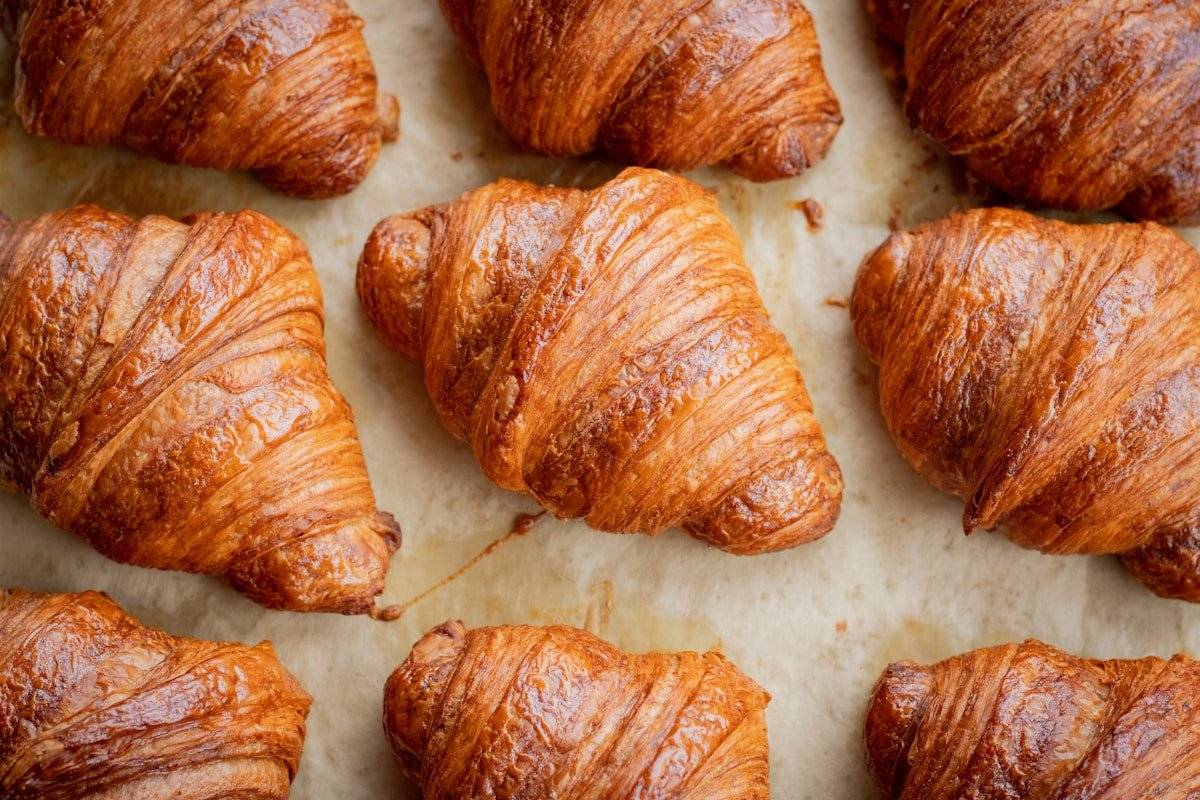
Appearance: The croissant should be deep golden brown with slightly darker edges. The surface should have distinct, visible layers that peel apart easily. The shape should be symmetrical, with the two ends curving inward to form a crescent. Avoid croissants that look pale, greasy, or have butter pooling on the baking sheet.
Texture: When you pick up a croissant, it should feel light and airy, not heavy or dense. The exterior should be crisp and shatter when bitten, while the interior should reveal a honeycomb structure of irregular air pockets. A perfect croissant has a delicate balance: flaky enough to shed crumbs, but sturdy enough to hold its shape. If the interior looks dense or doughy, it was under-proofed or overworked.
Aroma and Flavor: The scent should be rich and buttery with subtle notes of yeast and toasted flour. The flavor should be clean and well-balanced--buttery but not greasy, slightly sweet but not sugary, with a hint of salt. A good croissant doesn't need jam or butter; it should be delicious on its own. The finish should be clean, without any rancid or sour notes that indicate old butter or improper storage.
Freshness: Croissants are best eaten within 4-6 hours of baking. After 24 hours, they lose their crispness and become chewy. To revive a day-old croissant, reheat it in a 350°F (175°C) oven for 3-5 minutes--never microwave, which makes it rubbery. Freezing unbaked croissants is an excellent option: shape and proof them, then freeze before the final proof. Bake directly from frozen, adding 5-7 minutes to the baking time.
Mastering these evaluation criteria will help you appreciate the craftsmanship behind every croissant and make informed choices whether you're buying from a bakery or baking at home.