Pizza Hut Pan Pizza: The Story Behind America's Favorite Deep...
JM
Jordan Myers
Prep Time
15 mins
Cook Time
30 mins
Servings
4
Difficulty
Medium
The Birth of a Legend: How Pizza Hut Created the Pan Pizza
In 1980, Pizza Hut was already a dominant force in the American pizza scene, but it faced a growing challenge: competitors were offering thicker, more indulgent crusts that appealed to customers craving something heartier. The company's R&D team, led by food scientist John G. Phillips, set out to create a pizza that would stand out from the thin-crust offerings of the era. After months of testing, they landed on a revolutionary concept: a pizza baked in a deep, oiled pan that would produce a crust that was simultaneously crispy on the outside and soft and airy on the inside.
The key innovation was the pan itself. Pizza Hut's engineers designed a custom aluminum pan with a special non-stick coating and a unique geometry that allowed the dough to rise evenly while absorbing just the right amount of oil. The pan was filled with a precise amount of vegetable oil--about 1.5 tablespoons per 10-inch pizza--which would fry the bottom of the dough as it baked, creating that signature golden-brown crust. The dough itself was a proprietary blend of high-gluten flour, water, yeast, sugar, and salt, with a hydration level of around 60%, giving it the perfect balance of chewiness and tenderness.
Key Stat: Pizza Hut's Pan Pizza launch in 1980 increased the chain's same-store sales by 25% in the first year, making it the most successful product launch in the company's history.
The Pan Pizza debuted nationally in August 1980 with a massive advertising campaign featuring the tagline, "The pizza that's a meal in itself." The campaign worked: within six months, Pan Pizza accounted for 40% of all Pizza Hut orders. The product was so successful that it forced competitors like Domino's and Little Caesars to develop their own thick-crust offerings, sparking the "crust wars" of the 1980s.
The Secret Sauce: What Makes Pizza Hut Pan Pizza Unique
Unlike traditional deep-dish pizzas from Chicago, which are built with a thick, flaky crust and layers of cheese and toppings, Pizza Hut's Pan Pizza is a different beast entirely. The crust is not a pastry-style dough but a yeasted bread dough that is pressed into the pan, proofed for 45 minutes, then topped with sauce, cheese, and toppings before baking at 475°F for 12-14 minutes. The result is a crust that is about 1 inch thick, with a crispy, fried bottom and a soft, airy interior that soaks up the sauce without becoming soggy.
The sauce is another critical component. Pizza Hut uses a tomato sauce that is slightly sweeter and thicker than typical pizza sauces, with a blend of crushed tomatoes, sugar, salt, and spices like oregano and basil. The sweetness is intentional: it balances the saltiness of the cheese and the richness of the oil-fried crust. The cheese is a blend of 100% whole-milk mozzarella and a small amount of provolone, which adds a subtle tang and improves meltability. Each 10-inch Pan Pizza gets exactly 6 ounces of cheese, ensuring consistent coverage without overwhelming the other flavors.
The baking process is where the magic happens. The pan is placed directly on the oven deck, not on a rack, which allows the bottom of the pan to reach temperatures above 400°F. This direct heat creates a Maillard reaction on the dough's surface, producing hundreds of flavor compounds that give the crust its characteristic nutty, buttery taste. The oil in the pan also conducts heat efficiently, ensuring that the crust cooks evenly from edge to center. Pizza Hut's ovens are calibrated to maintain a specific temperature gradient: the bottom of the pan is 50°F hotter than the top, which ensures the crust is fully cooked while the cheese melts without burning.
The Cultural Impact: How Pan Pizza Changed American Eating Habits
Pizza Hut's Pan Pizza didn't just change the company's fortunes--it altered the entire American pizza landscape. Before 1980, pizza was largely seen as a quick, casual meal, often eaten by the slice. The Pan Pizza repositioned pizza as a hearty, sit-down dinner that could compete with burgers, fried chicken, and other comfort foods. It also introduced the concept of "pan pizza" as a distinct category, separate from both thin-crust and Chicago deep-dish, and inspired countless imitators.
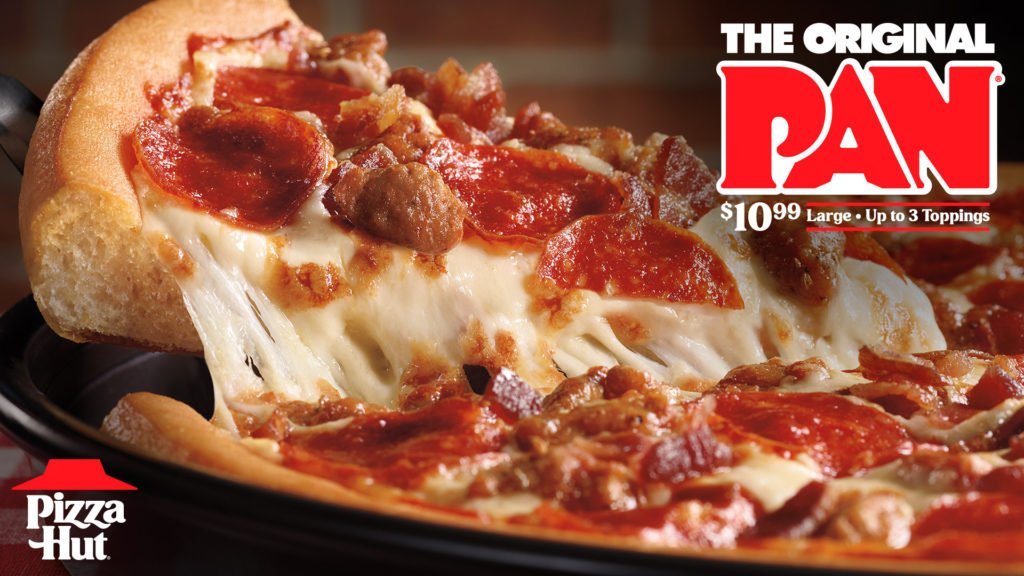
The product's success was fueled by clever marketing. Pizza Hut's "Pan Pizza" commercials of the early 1980s featured families and friends gathered around a table, pulling apart slices with visible strings of melted cheese. The ads emphasized the pizza's size and heft, often showing it being lifted from the pan with a dramatic flourish. This visual appeal, combined with the product's unique texture and flavor, made Pan Pizza a cultural touchstone. By 1985, Pizza Hut was selling over 1 million Pan Pizzas per day, and the chain had become the largest pizza company in the world by revenue.
The Pan Pizza also had a lasting impact on pizza delivery. Because the thick crust held heat better than thin-crust pizzas, it was ideal for delivery, maintaining its quality even after a 30-minute drive. This reliability helped Pizza Hut dominate the delivery market throughout the 1980s and 1990s. The product's popularity also led to the creation of spin-offs like the "Stuffed Crust" pizza (introduced in 1995), which used the same pan-baking technique but added a ring of cheese inside the crust.
The Science of the Crust: Why Pan Pizza Tastes So Good
The appeal of Pizza Hut's Pan Pizza can be explained by food science. The combination of oil, heat, and dough creates a series of chemical reactions that produce an irresistible flavor profile. The first is the Maillard reaction, which occurs when amino acids and reducing sugars in the dough react at temperatures above 285°F. This reaction produces hundreds of flavor compounds, including pyrazines, furans, and aldehydes, which give the crust its savory, toasty notes. The second is caramelization, which happens when sugars in the dough break down at higher temperatures, adding sweetness and color.
The oil plays a dual role. It conducts heat efficiently, ensuring the crust cooks evenly, and it also acts as a flavor carrier. The vegetable oil used by Pizza Hut has a high smoke point (around 450°F), which means it can withstand the baking temperature without breaking down and producing off-flavors. As the oil heats, it also absorbs fat-soluble flavor compounds from the dough and sauce, creating a rich, savory base that permeates the entire crust. The result is a crust that is flavorful from edge to center, not just on the surface.
The dough's hydration level is also critical. At 60% hydration, the dough is wet enough to produce a soft, airy crumb but dry enough to hold its shape during proofing and baking. The high-gluten flour provides the structure needed to support the weight of the toppings, while the yeast produces carbon dioxide that creates the air pockets responsible for the crust's light texture. The proofing time--45 minutes at room temperature--allows the yeast to ferment the dough, producing organic acids and alcohols that add complexity to the flavor. This is why a properly made Pan Pizza crust has a subtle sourdough-like tang, even though it's not a sourdough product.
Pan Pizza Today: Evolution, Variations, and Enduring Popularity
Pizza Hut's Pan Pizza has evolved over the decades, but the core recipe remains remarkably unchanged. In 2014, the company introduced a "Hand-Tossed" crust as a lighter alternative, but the Pan Pizza continues to account for roughly 30% of all Pizza Hut sales. The product has also inspired limited-time offerings like the "Ultimate Cheese Pan Pizza" (2019) and the "Big New Yorker" (2020), which used a larger pan to create a 16-inch pizza with a thinner, foldable crust.
The Pan Pizza's influence extends beyond Pizza Hut. Chains like Papa John's and Domino's have developed their own pan pizzas, though none have matched the original's cultural cachet. Independent pizzerias have also embraced the pan-baking technique, creating artisanal versions with sourdough crusts, organic toppings, and specialty oils. The rise of food delivery apps has further boosted the Pan Pizza's popularity, as its sturdy structure makes it ideal for travel.
Despite competition from fast-casual chains and gourmet pizzerias, Pizza Hut's Pan Pizza remains a beloved staple. Its success lies in its simplicity: a well-executed combination of dough, oil, sauce, and cheese, baked in a specific pan at a specific temperature. It's a testament to the power of food science and smart marketing, and a reminder that sometimes the most iconic foods are the ones that get the basics right. Whether you're eating it in a restaurant or having it delivered to your door, the Pan Pizza is a slice of American culinary history that shows no signs of fading away.
Pizza HistoryDeep DishFast FoodFood ScienceAmerican CuisinePizza Hut