Jianbing: China's Ultimate Breakfast Crepe Made on a Griddle...
JM
Jordan Myers
Prep Time
15 mins
Cook Time
30 mins
Servings
4
Difficulty
Medium
What Is Jianbing? The Anatomy of China's Ultimate Breakfast Crepe
Jianbing () is a savory Chinese crepe that has been fueling the nation's mornings for centuries. Unlike the delicate French crêpe or the thick American pancake, jianbing is a study in contrasts: a thin, chewy mung bean flour crepe wrapped around a crunchy fried wonton cracker (báo cuì), topped with a beaten egg, scallions, cilantro, and a brush of sweet bean sauce and spicy chili paste. It's assembled on a round, flat griddle cart that vendors wheel onto street corners from Beijing to Shanghai, and it's eaten on the go, folded into a neat, portable packet.
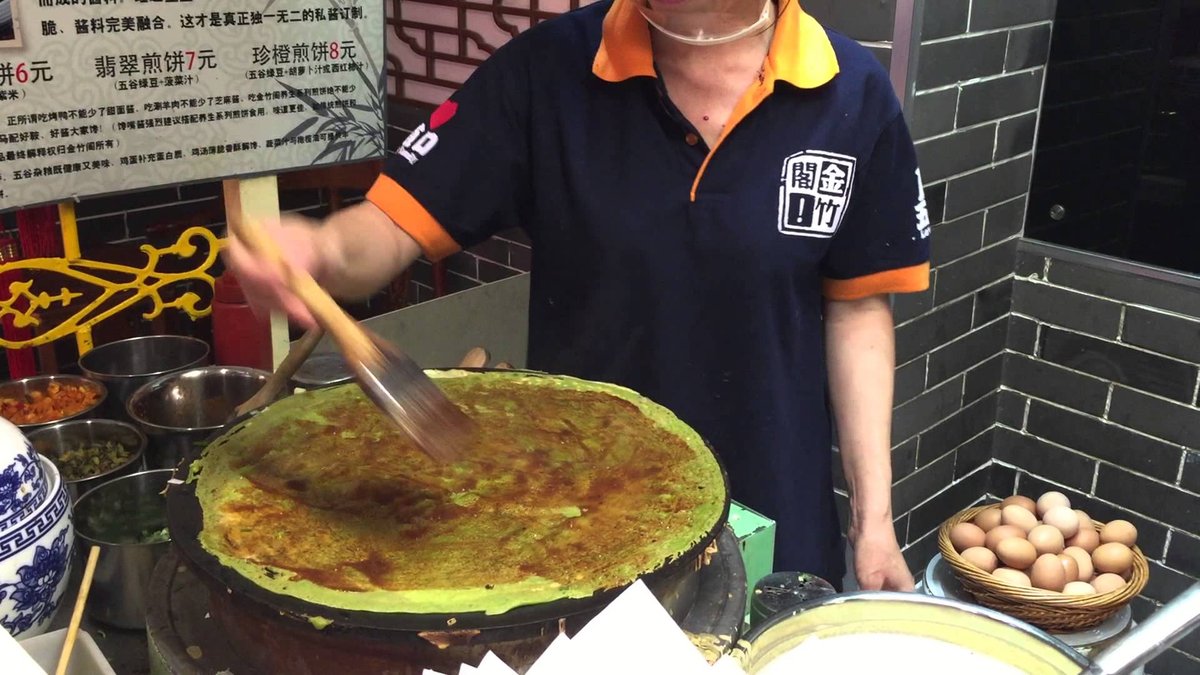
The magic of jianbing lies in its texture. The batter--traditionally a mix of mung bean flour, wheat flour, and water--is spread paper-thin across the hot griddle with a wooden T-shaped spreader (tǎng zi). Within seconds, the edges crisp while the center stays pliable. A cracked egg is swirled over the surface, then flipped so the egg cooks against the griddle. The result is a crepe that's simultaneously tender, crispy, and chewy, with the egg adding a rich, savory layer.
Key Stat: A typical jianbing contains about 300-400 calories and provides 15-20 grams of protein from the egg and mung bean batter, making it a balanced, portable breakfast that costs just 5-15 RMB ($0.70-$2.10) in most Chinese cities.
Jianbing is not just food; it's a performance. Watching a skilled vendor work is mesmerizing: the rhythmic spread of batter, the crack of an egg, the precise brush of sauce, the fold and wrap--all in under two minutes. This efficiency is why jianbing remains the ultimate breakfast for millions of commuters who need a hot, satisfying meal in a hurry.
The Griddle Cart: The Mobile Kitchen That Makes It Possible
The heart of jianbing culture is the griddle cart (jiān bǐng chē). These custom-built, three-wheeled carts are marvels of compact engineering. At the center is a round, flat steel or cast-iron griddle, typically 18-24 inches in diameter, heated by a propane burner underneath. The griddle is seasoned like a wok, developing a non-stick patina over years of use. Around the griddle, the cart is organized into compartments: a batter bucket, a bowl of eggs, containers for sauces (sweet bean sauce, chili oil, fermented bean curd), a pile of crispy wonton crackers, and a stack of paper-thin plastic bags for serving.
The cart's design is optimized for speed and hygiene. The vendor works from a single position, reaching for ingredients without moving their feet. The griddle's heat is adjustable via a propane valve, allowing the vendor to control the cooking speed based on the weather and customer volume. In winter, the cart might also have a small warming drawer to keep finished jianbing hot. The entire setup can be packed up and wheeled away in minutes--essential for vendors who must navigate city regulations and avoid fines.
In recent years, some vendors have upgraded to electric griddles or added digital payment QR codes, but the classic propane-powered cart remains the gold standard. The best jianbing carts are often family-run, with recipes passed down through generations. A veteran vendor can produce 100-150 jianbing per hour during the morning rush, each one customized to the customer's preferences: extra egg, no cilantro, double chili, or add a sausage (a modern twist).
How Jianbing Is Made: Step-by-Step from Batter to Bite
Making a jianbing is a precise, rapid-fire process that takes about 90 seconds from start to finish. Here's the breakdown:
Step 1: Spread the batter. The vendor ladles a thin stream of batter onto the hot griddle and immediately spreads it into a perfect circle using the tǎng zi. The batter must be thin enough to cook through quickly but thick enough to hold the fillings. The griddle temperature is critical--too hot and the batter burns before spreading; too cool and the crepe becomes tough.
Step 2: Crack the egg. An egg is cracked onto the crepe and spread evenly with the tǎng zi. The egg cooks almost instantly, creating a golden layer that binds the crepe together. Some vendors add a second egg for a richer flavor (jiā dàn).
Step 3: Flip and brush. Using a thin metal spatula, the vendor flips the crepe so the egg side faces down. Then they brush the top with a mixture of sweet bean sauce (tián miàn jiàng), chili sauce (là jiàng), and sometimes fermented bean curd (fǔ rǔ) for umami depth. A sprinkle of chopped scallions and cilantro follows.
Step 4: Add the crunch. A piece of crispy fried wonton wrapper (báo cuì) or a thin fried dough stick (yóu tiáo) is placed in the center. This is the textural anchor--without it, jianbing would be just a soft wrap. The vendor folds the crepe from both sides over the cracker, then folds the bottom up and the top down, creating a rectangular packet.
Step 5: Cut and serve. The jianbing is cut in half with the spatula, revealing the cross-section of egg, sauce, and crispy cracker. It's slipped into a small plastic bag or wrapped in paper, ready to eat immediately. The first bite delivers a symphony of textures: the soft, eggy crepe, the sticky-sweet sauce, the sharp scallion, and the shattering crunch of the wonton.
Regional Variations: From Beijing to Tianjin and Beyond
While the basic jianbing formula is consistent across China, regional variations offer distinct twists. Beijing-style jianbing is the most common version found in the capital. It uses a mung bean flour batter, which gives a slightly grayish color and a nutty, earthy flavor. The filling is typically a single crispy wonton cracker, and the sauce is sweet bean paste with a mild chili kick. Beijing vendors often add a sprinkle of sesame seeds for extra aroma.
Tianjin-style jianbing (jiān bǐng guǒ zi) is arguably the most famous variation. Instead of a crispy wonton, Tianjin jianbing wraps around a whole fried dough stick (yóu tiáo)--a long, airy, golden-brown fritter. This makes the crepe much more substantial, almost like a breakfast burrito. The batter in Tianjin is often made from a mix of mung bean and soybean flour, and the sauce is more garlicky and vinegary. Tianjin locals are fiercely proud of their version, claiming it's the original jianbing.
Other regions add local ingredients. In Shandong, jianbing might include a layer of fermented bean curd for a funky, salty kick. In Northeast China, vendors sometimes add a slice of ham or a sausage. In Shanghai, you'll find jianbing with a sweeter sauce and a thinner crepe. Some modern fusion carts in Western cities offer jianbing with avocado, smoked salmon, or sriracha mayo--but purists stick to the classic egg-and-cracker combo.
Why Jianbing Is the Ultimate Street Food Breakfast
Jianbing's enduring popularity isn't just about taste--it's about convenience, nutrition, and cultural identity. For the price of a cup of coffee in the West, you get a hot, protein-rich meal that's portable and customizable. The mung bean batter is naturally gluten-free (though many vendors add wheat flour for elasticity), and the egg provides high-quality protein. The scallions and cilantro add a fresh, vegetal note that cuts through the richness of the egg and sauce.
From a cultural perspective, jianbing represents the resourcefulness of Chinese street food. It uses simple, inexpensive ingredients--flour, eggs, scallions, sauce--and transforms them into something greater than the sum of their parts. The griddle cart is a symbol of entrepreneurship, allowing vendors to start a business with minimal capital. Many jianbing vendors are immigrants from rural areas who have built successful urban livelihoods selling this one dish.
For travelers, jianbing is a must-try street food experience. The best time to find it is between 6:00 AM and 9:00 AM, when vendors set up near subway stations, office buildings, and school gates. Look for a cart with a long line of locals--that's a sign of quality. Don't be shy about customizing your order: say "bù yào xiāng cài" (no cilantro) or "duō jiā là" (extra spicy). And eat it immediately--jianbing loses its magic within minutes as the crispy cracker softens.
In a world of fast-food homogenization, jianbing remains gloriously local, handmade, and personal. It's a breakfast that tells a story: of ancient cooking techniques, of urban hustle, of a culture that values flavor, speed, and community. Whether you're in Beijing, New York, or London, finding a jianbing cart is like discovering a secret portal to China's vibrant street food soul.
Street FoodChinese CuisineBreakfastCrepeBeijingGriddle Cart