Greek Moussaka: Layers of Eggplant, Meat, and Creamy Béchamel...
Jordan Myers
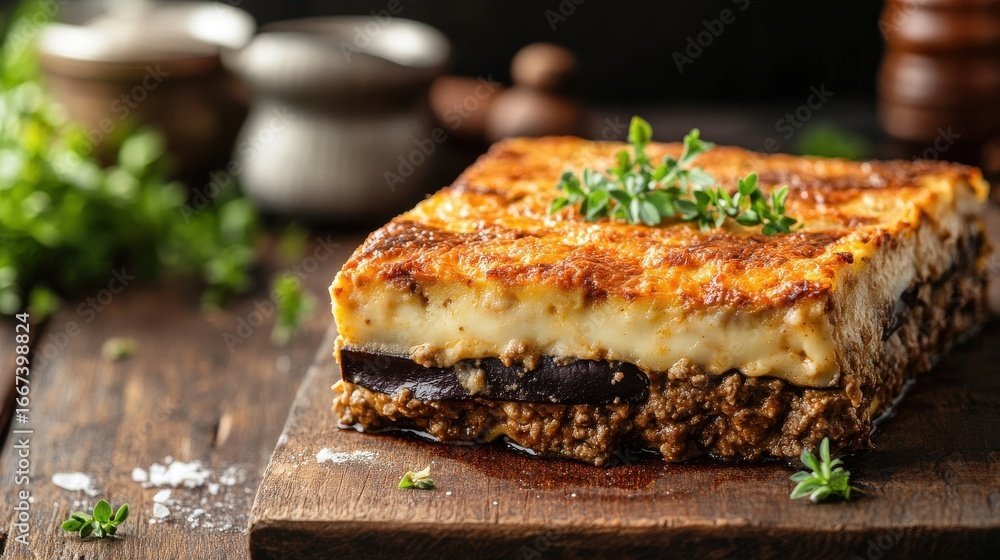
What Makes Greek Moussaka a Mediterranean Masterpiece
Greek moussaka is far more than a simple casserole--it's a layered symphony of textures and flavors that has defined home cooking and taverna menus across Greece for generations. Unlike its Middle Eastern cousins, the Greek version features a signature trio: silky fried eggplant, a deeply savory meat sauce infused with cinnamon and allspice, and a thick, velvety béchamel that bakes to a golden crown. Each component is prepared separately before assembly, ensuring every bite delivers distinct layers rather than a muddy blend.
The dish's roots trace back to the Ottoman Empire, but modern Greek moussaka as we know it was popularized by chef Nikolaos Tselementes in the early 20th century. He introduced the béchamel topping, elevating it from a simple vegetable-and-meat bake to an elegant centerpiece. Today, it remains a staple at family gatherings, Easter tables, and Sunday dinners--a testament to its enduring appeal. A single serving typically provides around 400-500 calories, with 20-25g of protein, making it a satisfying main course when paired with a crisp Greek salad.
Pro Tip: Salting and draining eggplant slices for 30 minutes before frying removes bitterness and excess moisture, preventing a soggy moussaka. Pat dry thoroughly before cooking.
Selecting and Preparing the Perfect Eggplant
Eggplant is the structural backbone of moussaka, providing tender, meaty layers that absorb the surrounding flavors. Choose large, firm globe eggplants with glossy, unblemished skin--about 2-3 pounds total for a standard 9x13-inch dish. Italian or American varieties work best due to their size and dense flesh. Avoid overly large or spongy eggplants, which can be seedy and bitter.
Preparation is critical. Slice the eggplants lengthwise into ½-inch thick planks--this shape creates broad, stable layers. Arrange the slices on a baking sheet, sprinkle generously with kosher salt, and let them sit for 30 minutes. The salt draws out bitter compounds and moisture through osmosis. Rinse quickly under cold water, then pat each slice bone-dry with paper towels. Skipping this step often leads to a watery, bitter final dish.
For the best texture, shallow-fry the eggplant in olive oil until golden brown on both sides, about 2-3 minutes per side. Use a heavy skillet over medium-high heat, adding oil as needed. Drain on paper towels to remove excess grease. Alternatively, brush slices with oil and bake at 400°F for 20 minutes, flipping halfway--this reduces oil absorption by nearly 40% while still achieving tender results. Whichever method you choose, properly cooked eggplant should be pliable but not mushy, with a slight resistance when pierced.
Building the Spiced Meat Sauce with Depth
The meat layer in Greek moussaka is not a simple Bolognese--it's a fragrant, slow-simmered mixture that balances savory richness with warm Mediterranean spices. Start with 1½ pounds of ground lamb or a 50/50 blend of lamb and beef. Lamb provides authentic flavor, but beef alone works well if lamb is unavailable. Brown the meat in a large pot over medium-high heat, breaking it into small crumbles, until no pink remains. Drain all but 2 tablespoons of fat.
To the pot, add one finely diced yellow onion and 4 minced garlic cloves, cooking until softened, about 5 minutes. Stir in 3 tablespoons of tomato paste and cook for 1 minute to deepen its flavor. Then add a 14-ounce can of crushed tomatoes, ½ cup dry red wine, 1 teaspoon ground cinnamon, ½ teaspoon ground allspice, 1 teaspoon dried oregano, ½ teaspoon black pepper, and 1 teaspoon salt. Cinnamon and allspice are non-negotiable--they give Greek moussaka its distinctive warmth without making it sweet. Simmer uncovered for 20-25 minutes, stirring occasionally, until the sauce thickens and most liquid evaporates. The final consistency should be thick enough to hold its shape on a spoon, not soupy.
For extra depth, add ¼ cup chopped fresh parsley and 2 bay leaves during simmering. Remove bay leaves before assembly. Some cooks also include a pinch of nutmeg or a dash of red wine vinegar for brightness. Let the sauce cool slightly before layering--it will continue to thicken as it sits.
Crafting the Silky Béchamel Crown
Béchamel is what sets Greek moussaka apart from other baked casseroles. It transforms the dish from hearty to luxurious, creating a creamy, custard-like top that browns beautifully in the oven. In a medium saucepan, melt 6 tablespoons of unsalted butter over medium heat. Whisk in ½ cup all-purpose flour and cook for 2 minutes, stirring constantly, until the mixture turns pale golden and smells nutty--this roux eliminates raw flour taste.
Slowly pour in 3 cups of whole milk, whisking vigorously to prevent lumps. Continue cooking over medium heat, whisking frequently, until the sauce thickens enough to coat the back of a spoon, about 5-7 minutes. Remove from heat and stir in ½ teaspoon salt, ¼ teaspoon white pepper, and a generous pinch of freshly grated nutmeg. Nutmeg is essential--it complements both the béchamel and the spiced meat below.
For a richer, more stable topping, beat 2 large eggs in a small bowl, then slowly temper them by whisking in about ½ cup of the hot béchamel. Pour the egg mixture back into the saucepan, whisking constantly. This technique prevents scrambled eggs and gives the béchamel a silky, custard-like texture. Finally, stir in ½ cup grated Parmesan or Kefalotyri cheese for extra flavor and browning. The finished béchamel should be thick but pourable--if it becomes too stiff, thin with a tablespoon of milk.
Assembling and Baking to Golden Perfection
Now comes the layering, which requires patience and precision. Lightly grease a 9x13-inch baking dish with olive oil or butter. Start with a single layer of eggplant slices, overlapping slightly to cover the bottom completely. Spread half of the meat sauce evenly over the eggplant. Repeat with another layer of eggplant, then the remaining meat sauce. Top with a final layer of eggplant slices, pressing down gently to compact the layers.
Pour the béchamel over the top, spreading it evenly with a spatula to the edges. The sauce should completely cover the eggplant--any gaps will dry out during baking. For a professional finish, use the back of a fork to create decorative swirls or peaks on the surface; these will brown more intensely. Place the dish on a baking sheet to catch any overflow, then bake at 350°F for 45-50 minutes, until the béchamel is puffed, golden brown, and the edges are bubbling.
Let the moussaka rest for at least 15-20 minutes before slicing. This resting period is crucial--it allows the layers to set and prevents the casserole from collapsing into a soupy mess when cut. Serve warm, not piping hot, with a side of Greek salad and crusty bread. Leftovers keep well in the refrigerator for up to 4 days, and the flavors actually deepen overnight. Reheat gently in a 300°F oven to preserve the béchamel's texture.