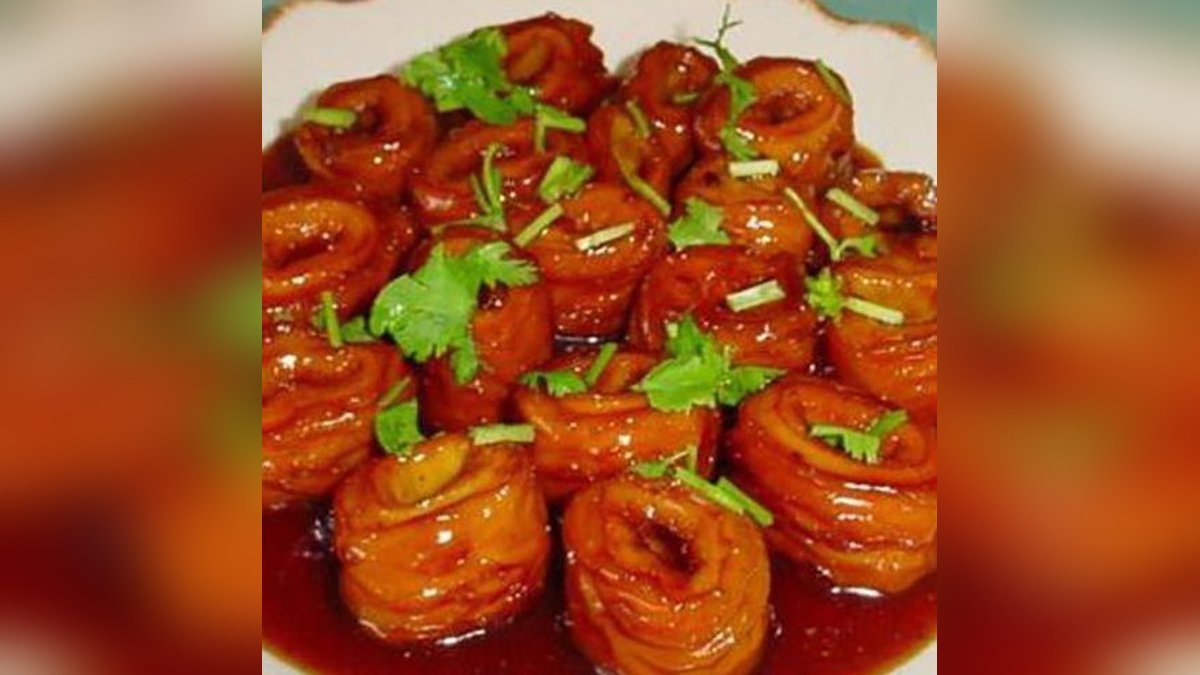
What Is Jiu Zhuan Da Chang? The History Behind Shandong's Prized Intestine Dish
Jiu Zhuan Da Chang (), or Nine-Turn Braised Intestine, stands as one of the crown jewels of Shandong cuisine (Lu Cai). This dish transforms humble pork intestines into a luxurious delicacy through an elaborate braising process that requires patience, precision, and a deep understanding of Chinese culinary techniques. The name "nine turns" refers both to the intricate spiral shape of the finished intestine and the multiple stages of cooking that refine its texture and flavor.
The dish originated during the Qing Dynasty in Jinan, Shandong's capital. According to culinary historians, a restaurateur named Du from the famous Dezhou restaurant created this masterpiece after being inspired by the complex layering of flavors in traditional Chinese medicine. He wanted to create a dish that would cleanse the palate while delivering profound umami. The nine-turn process--which involves parboiling, simmering, braising, and reducing--removes any unpleasant gaminess from the pork intestine while infusing it with a symphony of sweet, savory, and aromatic notes.
Traditional Jiu Zhuan Da Chang requires exactly nine distinct cooking steps, including three separate rinses and three simmering stages, to achieve its signature tender-yet-chewy texture and mahogany glaze.
Today, this dish remains a benchmark for chefs specializing in Lu Cai. It is rarely found outside of Shandong province due to the labor-intensive preparation, but its reputation has spread among serious food enthusiasts worldwide. The dish exemplifies the Shandong philosophy of using simple ingredients to create extraordinary results through technique rather than exotic components.
Essential Ingredients: Sourcing and Preparing Pork Intestine for Nine-Turn Braising
The foundation of authentic Jiu Zhuan Da Chang lies in the quality of the pork intestine. Chefs typically use the large intestine () rather than the small intestine because its thicker walls can withstand the prolonged braising without disintegrating. When sourcing, look for intestines that are pale pink, firm to the touch, and free from any off-putting odors. Freshness is paramount--frozen intestines often develop a mushy texture after thawing.
Cleaning the intestine is the most critical and time-consuming step. The traditional method involves turning the intestine inside out and scrubbing it repeatedly with coarse salt and flour. The salt acts as an abrasive to remove mucus and impurities, while the flour absorbs residual odors. After the initial scrub, the intestine must be rinsed under cold running water for at least five minutes. This process is repeated three times--hence the "nine turns" in the name--until the water runs clear and the intestine smells clean.
After cleaning, the intestine is parboiled in boiling water with ginger slices and Shaoxing wine for exactly three minutes. This step firms the texture and removes any remaining impurities. The parboiled intestine is then cut into two-inch segments and scored lightly on the inside surface with a diamond pattern. This scoring allows the braising liquid to penetrate deeply and creates the characteristic curled shape as the intestine cooks.
For the braising liquid, you will need: light soy sauce, dark soy sauce, rock sugar, Shaoxing wine, ginger, scallions, star anise, cinnamon stick, Sichuan peppercorns, and a small amount of aged vinegar. Some regional variations add a touch of fermented bean curd () for extra depth, though purists argue this masks the natural flavor of the intestine. The key is balance--the sauce should be sweet, salty, and aromatic without any single element dominating.
The Nine-Step Braising Technique: Mastering the Cooking Process
Step one begins with caramelizing rock sugar in a wok over medium heat. The sugar should melt to a deep amber color--not burnt--before adding the parboiled intestine segments. Toss them quickly to coat each piece in the caramel, which forms the foundation of the dish's glossy finish. This step requires careful attention; if the sugar burns, the entire dish will taste bitter.
Step two involves deglazing the wok with Shaoxing wine and adding the remaining braising ingredients. The liquid should just cover the intestine pieces. Bring the mixture to a boil, then reduce to a gentle simmer. Cover and cook for 45 minutes, turning the pieces occasionally to ensure even absorption. The low temperature is crucial--boiling will toughen the intestine and cause it to shrink excessively.
Steps three through eight are a series of reductions and adjustments. After the initial simmer, remove the lid and increase the heat slightly to reduce the liquid by half. Add a splash of aged vinegar and a pinch of white pepper, then continue simmering uncovered for another 20 minutes. Repeat this reduction process two more times, each time adding a small amount of fresh ginger and scallion to brighten the flavors. By the eighth step, the sauce should be thick enough to coat the back of a spoon, and the intestine should be tender enough to pierce with a chopstick but still retain a pleasant chew.
The final step--the ninth turn--is the plating. Arrange the braised intestine segments in a spiral pattern on a warmed plate. Spoon the remaining sauce over the top, allowing it to glaze each piece. Garnish with thinly sliced scallion curls and a sprinkle of toasted sesame seeds. The dish should be served immediately while still hot, as the sauce will thicken and lose its luster as it cools.
Flavor Profile and Texture: What Makes This Dish Extraordinary
Jiu Zhuan Da Chang offers a flavor experience unlike any other Chinese dish. The initial taste is sweet from the caramelized rock sugar, followed immediately by the savory depth of soy sauce and the aromatic warmth of star anise and cinnamon. The aged vinegar adds a subtle acidity that cuts through the richness, while the Shaoxing wine contributes a floral complexity. The finish is clean, with no lingering gaminess--a testament to the thorough cleaning and braising process.
Texture is equally important. The outer surface of the intestine develops a slight tackiness from the reduced sauce, similar to the glaze on char siu. The interior remains tender but with a distinct resistance--what Chinese chefs call "q" () texture. This chewiness is the hallmark of properly prepared intestine; overcooking results in mushiness, while undercooking leaves it rubbery. The scoring on the inside creates a subtle crunch from the caramelized edges, adding another layer of textural contrast.
Pairing suggestions: Serve Jiu Zhuan Da Chang with steamed jasmine rice to absorb the rich sauce. A side of blanched bok choy or gai lan provides a fresh, bitter counterpoint. For beverages, a light Chinese tea like jasmine or oolong cleanses the palate between bites. Avoid heavy red wines or strong spirits, which can overwhelm the delicate balance of flavors.
Nutritional considerations: Pork intestine is high in protein and contains significant amounts of vitamin B12 and zinc, but it is also rich in cholesterol and saturated fat. A single serving (approximately 150 grams) contains about 350 calories and 25 grams of fat. This dish is best enjoyed as an occasional indulgence rather than a weekly staple, particularly for those monitoring their cardiovascular health.
Common Mistakes and Pro Tips for Home Cooks
The most frequent error home cooks make is insufficient cleaning. Even a trace of residual odor will permeate the entire dish, ruining the delicate flavor balance. Do not skip the triple-wash method, and consider adding a tablespoon of baking soda to the first scrub--it helps break down fats and neutralizes odors more effectively than salt alone. Rinse thoroughly afterward to remove any alkaline taste.
Another common pitfall is rushing the braising process. The nine-turn method is not merely symbolic; each reduction step concentrates flavors and transforms the texture. Attempting to speed things up by using high heat will result in tough, shrunken intestine with a thin, watery sauce. Plan for at least two hours from start to finish, and resist the urge to add extra liquid during the reductions--the sauce should naturally thicken through evaporation.
Pro tip: For the most authentic results, use a clay pot () instead of a metal wok for the braising stage. Clay distributes heat more evenly and retains temperature longer, allowing the collagen in the intestine to break down gradually. If using a wok, choose one with a heavy bottom to prevent hot spots that can scorch the sauce.
Storage and reheating: Leftover Jiu Zhuan Da Chang can be refrigerated for up to three days. The flavors actually deepen overnight as the spices continue to meld. To reheat, steam the intestine pieces for 5-7 minutes rather than microwaving, which can make them rubbery. Alternatively, reheat gently in a covered pan with a tablespoon of water over low heat, turning once. Do not reheat in the sauce alone, as the sugars can burn.