Squirrel-Shaped Mandarin Fish: Jiangsu's Sweet
Jordan Myers
What Makes Squirrel-Shaped Mandarin Fish a Jiangsu Icon
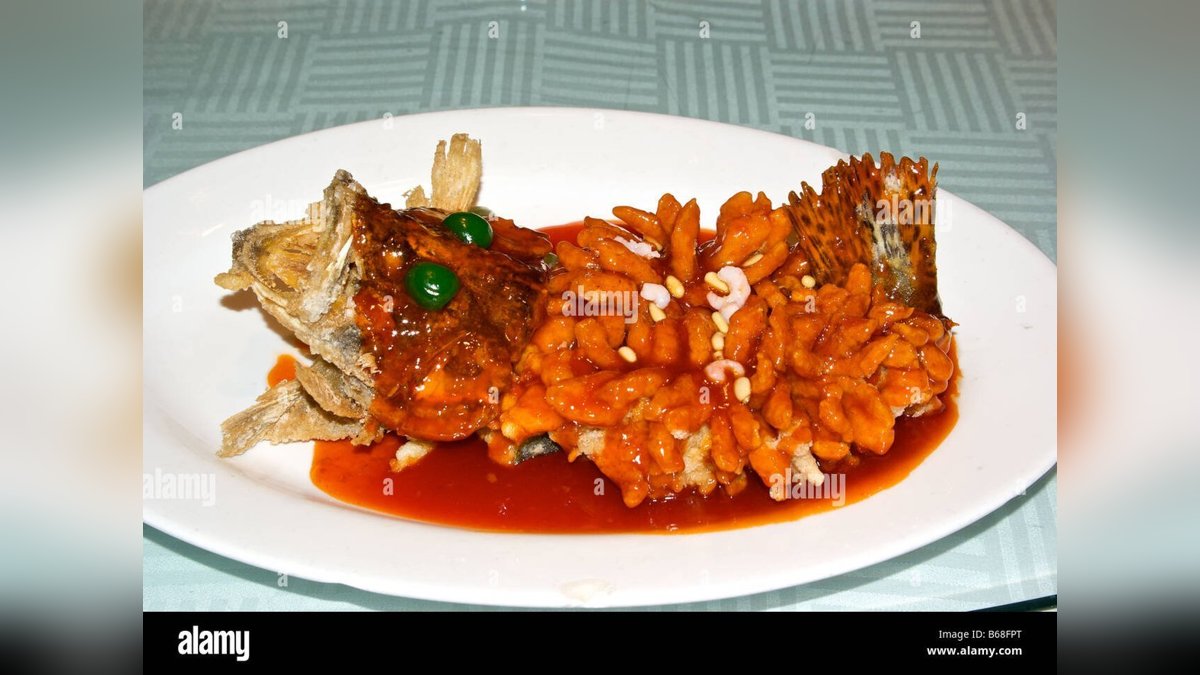
Squirrel-Shaped Mandarin Fish (, sōng shǔ guì yú) is one of the most visually stunning and technically demanding dishes in all of Chinese cuisine. Originating from Suzhou in Jiangsu province, this dish belongs to the Huaiyang culinary tradition, known for its meticulous knife work, delicate flavors, and artistic presentation. The dish takes its name from the way the fish is scored and fried: the flesh fans out into a bushy, tail-up shape that resembles a squirrel's tail, while the head remains intact and slightly raised.
The fish used is mandarin fish (also called Chinese perch or Siniperca chuatsi), prized for its firm white flesh, mild sweetness, and relatively few bones. The preparation involves a precise cross-hatch scoring pattern that allows the fish to curl dramatically when fried, creating the signature silhouette. After a quick fry at high heat, the fish is drenched in a vibrant sweet-and-sour sauce made from rice vinegar, sugar, ketchup, and sometimes a touch of soy sauce, then garnished with pine nuts and scallion curls.
Key Stat: A properly executed Squirrel-Shaped Mandarin Fish requires over 60 precise knife cuts on each side of the fish, each cut spaced exactly 3-4 mm apart, to achieve the signature bushy tail effect without breaking the skin.
What sets this dish apart from other sweet-and-sour fish preparations is the combination of texture and theater. The exterior is shatteringly crisp, the interior is tender and flaky, and the sauce provides a bright, tangy counterpoint. The presentation is dramatic enough to be the centerpiece of any banquet, yet the technique is accessible to home cooks willing to practice their knife skills.
The Knife Work: Scoring the Perfect Squirrel Tail
The soul of this dish lies in the knife cuts. Without proper scoring, the fish will not curl into its iconic shape, and the texture will be uneven. Start with a whole mandarin fish, about 1.5 to 2 pounds, cleaned and scaled but with the head and tail intact. Pat the fish completely dry with paper towels--moisture is the enemy of crispiness.
Lay the fish on a cutting board and make a deep cut behind the gills to separate the head slightly, but leave it attached. Then, using a sharp chef's knife or a cleaver, make a series of parallel cuts along the length of the fish, starting from the head end and working toward the tail. The cuts should be about 3-4 mm apart and go almost to the skin but not through it. Rotate the fish 90 degrees and repeat the process, creating a cross-hatch pattern. This scoring allows the flesh to fan out during frying.
After scoring, season the fish lightly with salt and Shaoxing wine, then dust it evenly with cornstarch, making sure to get the starch into every crevice of the cross-hatch. This coating is what creates the crispy, textured exterior. Let the fish rest for 10 minutes so the starch adheres properly. Meanwhile, heat oil in a deep wok or pot to 350°F (175°C). The oil should be deep enough to submerge the fish completely.
Frying Technique: Achieving the Curl and Crisp
Frying is where the magic happens. Hold the fish by the tail and carefully lower it into the hot oil, head first. Use a slotted spoon or tongs to gently hold the fish in a curved position for the first 30 seconds, encouraging the scored flesh to fan outward and the tail to curl upward. This initial shaping is critical--if you drop the fish in flat, it will not achieve the squirrel shape.
Fry the fish for about 4-5 minutes total, turning once, until the exterior is deep golden brown and the internal temperature reaches 145°F (63°C). The cornstarch coating should puff and crisp, creating a texture that shatters when bitten. Remove the fish with a spider strainer and drain on paper towels. The head can be fried separately for 2-3 minutes if you prefer it extra crispy, or you can leave it attached and fry it with the body.
While the fish rests, prepare the sauce. In a small saucepan, combine 1/4 cup rice vinegar, 3 tablespoons sugar, 2 tablespoons ketchup, 1 tablespoon soy sauce, and 1/2 cup chicken stock. Bring to a simmer, then thicken with a slurry of 1 tablespoon cornstarch mixed with 2 tablespoons water. Stir until the sauce is glossy and coats the back of a spoon. Add a splash of sesame oil and a pinch of white pepper. Some versions include diced pineapple or bell pepper for texture, but the classic Jiangsu version keeps the sauce smooth.
Plating and Presentation: The Final Flourish
Presentation is everything with this dish. Place the fried fish on a large oval platter, tail pointing upward. Spoon the hot sweet-sour sauce over the fish, letting it cascade down the scored flesh and pool around the base. The sauce should be vibrant red-orange, contrasting with the golden-brown fish.
Garnish with toasted pine nuts (or slivered almonds), which add a nutty crunch and visual interest. Scallion curls--thinly sliced scallions soaked in ice water until they curl--add a fresh green accent. Some chefs also add a few sprigs of cilantro or a dusting of sesame seeds. Serve immediately, while the fish is still hot and the exterior is at its crispiest.
The dish is traditionally eaten communally, with diners using chopsticks to pull off pieces of the crispy fish and dip them into the sauce pooled on the plate. The contrast between the crunchy exterior and the tender, flaky interior is the hallmark of a well-executed squirrel fish. Pair it with steamed jasmine rice and a simple stir-fried green vegetable, such as bok choy or Chinese broccoli, to balance the richness.
Common Mistakes and How to Avoid Them
Even experienced cooks can struggle with this dish. The most common mistake is cutting through the skin during scoring. If the skin is broken, the fish will not hold its shape during frying, and the flesh will separate. Use a very sharp knife and cut with a gentle sawing motion, stopping just short of the skin. Practice on a piece of firm tofu or a potato before attempting the fish.
Another frequent error is insufficient drying before coating. Any moisture on the fish will cause the cornstarch to clump and the coating to steam rather than crisp. Pat the fish dry thoroughly, then let it air-dry for 5 minutes before dusting with starch. Also, make sure the oil is at the correct temperature--too low, and the fish will absorb oil and become greasy; too high, and the exterior will burn before the interior cooks through.
Finally, don't skip the resting step after coating. The cornstarch needs time to hydrate and adhere to the fish. If you fry immediately, the starch will slide off into the oil, leaving you with a bare fish and a cloudy frying oil. With practice, you'll be able to produce a squirrel fish that rivals what you'd find in a top Suzhou restaurant.