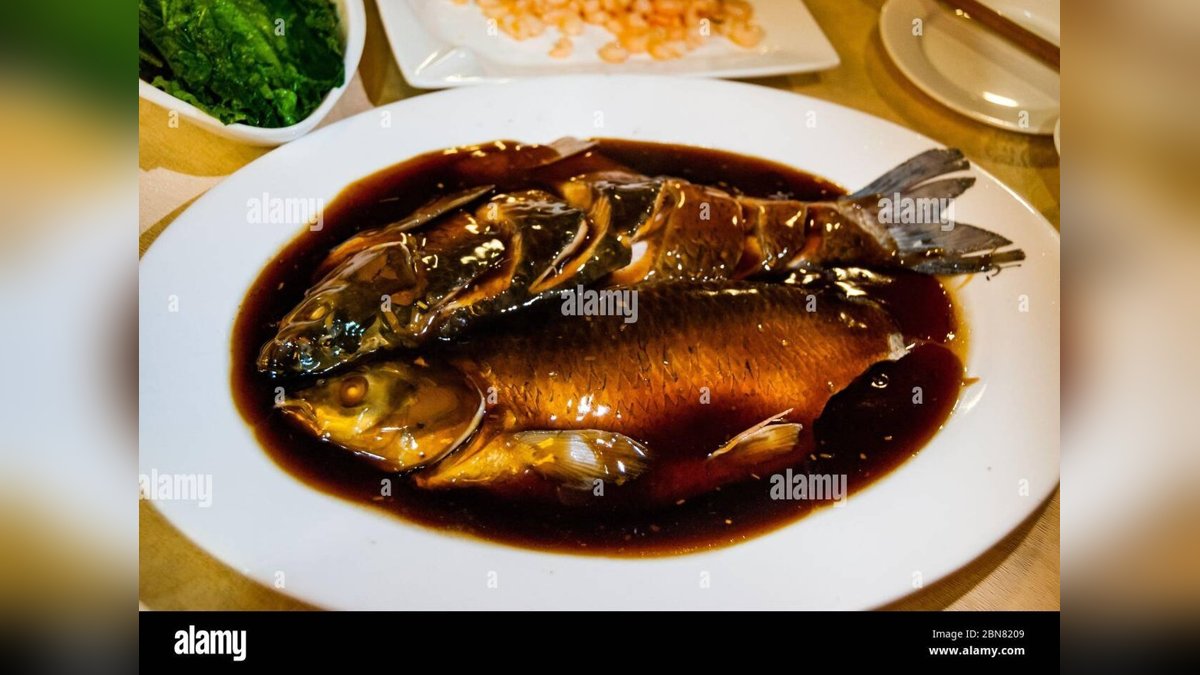
The Origins of West Lake Vinegar Fish: A Tale of Song Dynasty Ingenuity
West Lake Vinegar Fish (, Xī Hú Cù Yú) is not merely a dish--it is a culinary artifact that carries the soul of Hangzhou's gastronomic heritage. Legend traces its roots to the Southern Song Dynasty (1127-1279), when two brothers, Song and his younger sibling, fled to Hangzhou after their father was wrongfully executed. The elder brother became a fisherman on West Lake, while the younger studied diligently. One day, the elder brother fell gravely ill, and his sister-in-law, desperate to provide nourishment, caught a grass carp from the lake, steamed it gently, and dressed it with a tangy vinegar sauce to stimulate his appetite. The dish revived him, and when the younger brother later passed the imperial examinations, he requested that the same dish be served at his celebration banquet. Thus, West Lake Vinegar Fish entered the annals of Chinese culinary history.
Today, this dish is recognized as a cornerstone of Zhejiang cuisine, specifically the Hangzhou school, known for its delicate flavors, fresh ingredients, and refined techniques. Unlike the bold, fiery profiles of Sichuan or the rich, soy-forward notes of Shandong, Hangzhou cooking emphasizes the natural essence of its components. West Lake Vinegar Fish exemplifies this philosophy: the pristine sweetness of freshwater fish, the bright acidity of Zhejiang black vinegar, and the subtle sweetness of sugar, all balanced to perfection. The dish has been honored as one of China's "Top Ten Famous Dishes" and remains a must-order at iconic restaurants like Lou Wai Lou, which has been serving it since 1848.
Key Stat: According to the Hangzhou Culinary Association, over 2 million portions of West Lake Vinegar Fish are served annually in Hangzhou's restaurants, with Lou Wai Lou alone preparing more than 500 plates daily during peak tourist season.
What sets this dish apart is its deceptive simplicity. The ingredients list is short--fresh grass carp, Zhejiang black vinegar, sugar, ginger, scallions, and soy sauce--but the execution demands precision. The fish must be alive until moments before cooking to ensure the flesh remains firm and sweet. The vinegar sauce must strike a precise balance: too tart, and it overwhelms; too sweet, and it becomes cloying. The final garnish of fresh ginger shreds is not decorative; it cuts through the richness and adds a subtle heat that completes the flavor profile.
Selecting the Perfect Fish: Why Grass Carp Reigns Supreme
The soul of West Lake Vinegar Fish lies in its primary ingredient: the grass carp (Ctenopharyngodon idella). This freshwater fish, native to East Asia, is prized for its firm, white flesh and mild, slightly sweet flavor that absorbs the vinegar sauce beautifully. Grass carp typically weigh between 1.5 to 2.5 kilograms (3.3 to 5.5 pounds) when harvested for this dish, as smaller fish lack the meaty texture, while larger ones can become tough. The fish must be sourced from clean, slow-moving waters--ideally from West Lake itself or nearby freshwater lakes in Zhejiang province--to avoid any muddy taste that can plague bottom-feeding species.
When selecting a grass carp for this recipe, freshness is non-negotiable. Look for clear, bulging eyes; bright red gills; and flesh that springs back when pressed. The fish should have a clean, briny smell, not a fishy or ammonia-like odor. Many traditional chefs insist on using live fish, killing and cleaning them only minutes before cooking. This practice, known as "live killing" (, huó shā), ensures the muscle fibers remain intact and the texture stays silky. In Hangzhou's wet markets, you can often see tanks of grass carp swimming, and customers point to their chosen fish, which is then netted, dispatched, and prepared on the spot.
While grass carp is the traditional choice, some modern interpretations use other freshwater fish such as black carp or even sea bass for a milder flavor. However, purists argue that no substitute can replicate the unique texture of grass carp. The fish's natural oil content is moderate--about 2-3% fat--which allows it to hold up to the steaming process without becoming dry. The flesh flakes easily when cooked but remains firm enough to be lifted with chopsticks without disintegrating. This structural integrity is crucial because the fish is served whole, and presentation matters as much as taste in Hangzhou cuisine.
The Art of the Vinegar Sauce: Balancing Sweet, Sour, and Savory
The vinegar sauce is the defining element of West Lake Vinegar Fish, and mastering it requires understanding the interplay of its three core components: Zhejiang black vinegar, sugar, and light soy sauce. Zhejiang black vinegar (, Zhèjiāng hēi cù) is a aged rice vinegar with a deep, malty flavor reminiscent of balsamic vinegar but with a sharper acidity. Unlike the clear, sharp white vinegar common in Western cooking, this vinegar has a complex, slightly smoky undertone that develops during its months-long fermentation process. The sugar--typically white granulated sugar--tempers the vinegar's bite and adds a glossy sheen to the sauce. Light soy sauce provides the savory umami base that anchors the sweet-sour profile.
The ratio of these ingredients is a closely guarded secret among Hangzhou chefs, but a standard starting point is 3 parts vinegar to 2 parts sugar to 1 part soy sauce, adjusted to taste. The sauce is simmered gently until the sugar dissolves completely and the mixture thickens slightly, then a cornstarch slurry is added to achieve a silky, pourable consistency. The final sauce should coat the back of a spoon lightly--too thin, and it runs off the fish; too thick, and it becomes gluey. A pinch of white pepper is sometimes added for warmth, though traditional recipes omit it to let the vinegar shine.
One common mistake home cooks make is using the wrong type of vinegar. Substituting Chinese black vinegar with balsamic vinegar or red wine vinegar will drastically alter the flavor profile. Balsamic vinegar is too sweet and syrupy, while red wine vinegar lacks the depth and complexity of Zhejiang black vinegar. If you cannot find authentic Zhejiang black vinegar, Chinkiang vinegar (, Zhènjiāng xiāng cù) is an acceptable substitute, as it shares similar fermentation characteristics. Avoid distilled white vinegar at all costs--it will produce a harsh, one-dimensional sauce that ruins the dish's harmony.
Step-by-Step Cooking Technique: From Live Fish to Plated Masterpiece
Cooking West Lake Vinegar Fish is a test of timing and precision. The entire process, from killing the fish to plating, should take no more than 15 minutes to preserve the fish's freshness. Begin by cleaning the grass carp: scale it, gut it, and rinse the cavity thoroughly. Make two shallow diagonal cuts on each side of the fish, about 2 inches apart, to allow even cooking and sauce absorption. Some chefs also make a deep cut along the backbone to ensure the thickest part of the fish cooks through. Bring a large pot of water to a rolling boil, then reduce to a gentle simmer--the water should be around 185°F (85°C), not boiling vigorously, to prevent the fish from breaking apart.
Gently lower the fish into the water, ensuring it is fully submerged. Poach for 8-10 minutes, depending on the fish's size, until the flesh near the backbone is opaque and flakes easily with a fork. Do not overcook; the fish should be just cooked through, with a moist, tender interior. Using a slotted spatula, carefully transfer the fish to a warmed serving platter. Reserve about 1 cup of the poaching liquid for the sauce--this liquid contains natural gelatin from the fish skin and bones, which adds body to the sauce. While the fish rests, prepare the sauce in a small saucepan. Combine the reserved poaching liquid, Zhejiang black vinegar, sugar, and light soy sauce. Bring to a simmer, stirring until the sugar dissolves. In a small bowl, mix 1 tablespoon of cornstarch with 2 tablespoons of cold water to form a slurry. Slowly drizzle the slurry into the simmering sauce, stirring constantly, until the sauce thickens and becomes translucent. Remove from heat immediately.
Pour the sauce evenly over the poached fish, ensuring it coats the entire surface. Garnish with thin julienned fresh ginger, chopped scallions, and a few sprigs of cilantro for color and aroma. Serve immediately while the fish is still warm. The dish is traditionally accompanied by steamed white rice, which absorbs the tangy sauce and balances the flavors. Some restaurants also serve it with a side of blanched bok choy or Chinese broccoli for added texture and nutrition. The key to success is speed: the fish should go from pot to table in under 5 minutes to maintain its ideal temperature and texture.
Where to Experience Authentic West Lake Vinegar Fish in Hangzhou
For the ultimate West Lake Vinegar Fish experience, a pilgrimage to Hangzhou is essential. The city's culinary landscape is dotted with restaurants that have perfected this dish over generations. Lou Wai Lou (), established in 1848 on the shores of West Lake, is the most famous purveyor. Their version uses grass carp sourced directly from the lake, and the sauce is made with a proprietary blend of aged vinegars. The restaurant's location offers stunning views of the lake and the iconic Broken Bridge, making it a favorite among tourists and locals alike. Expect to pay around 128 RMB (approximately $18 USD) for a serving, which is considered reasonable for the quality and setting.
Another excellent option is Zhi Wei Guan (), a century-old establishment known for its Hangzhou-style dim sum and classic dishes. Their West Lake Vinegar Fish is slightly sweeter than Lou Wai Lou's, appealing to those with a preference for a more pronounced sugar note. The restaurant's branch on Renmin Road is particularly popular, with long queues during lunch and dinner hours. For a more intimate experience, head to Grandma's Home (), a modern chain that offers a more affordable version at around 68 RMB. While not as refined as the traditional restaurants, it provides a solid introduction to the dish for budget-conscious travelers.
If you cannot travel to Hangzhou, many Chinese restaurants in major US cities with strong Zhejiang or Shanghai culinary scenes offer West Lake Vinegar Fish. In New York City, restaurants like Jiang Nan and Hwa Yuan Szechuan (despite its name) serve credible versions. In San Francisco, the Harbor Village and Yank Sing restaurants include it on their menus during seasonal promotions. When ordering, ask if the fish is grass carp and if the vinegar used is Zhejiang black vinegar--these details indicate authenticity. A well-executed West Lake Vinegar Fish should have a glossy, mahogany-colored sauce that clings to the fish, with a balanced sweet-sour profile that lingers pleasantly on the palate. The ginger garnish should be fresh and pungent, providing a counterpoint to the sauce's richness.